ComparisonHand-Washing vs. Machine-Washing Silk Pillowcases
Compare hand-washing, a protected delicate cycle, and professional care for silk pillowcases whose labels allow each method.
By Khristmas Putman
The bottom line
Hand-wash if your label recommends it and you have time for one case at a time. Use a cool delicate cycle with a mesh bag when the label permits machine washing and a suitable load is ready. Treat professional care as a separate option only when the label allows it. Whatever method you use, leave enough time for the recommended drying step.
What to look for
- Read the label before washing, even if the new case resembles one you already own.
- Choose a detergent that the maker identifies as suitable for silk.
- Give the case enough room in a small load without abrasive items.
- Set out a clean surface or drying rack before you start.
At a glance
Approximate U.S. price ranges vary by size, seller, and date.
| Option | Price range | Material | Size | Best use | Pros | Cons |
|---|
| Wash by hand | Low per wash | Label-approved silk | Any case size | Small loads or one case | Direct handling control | More hands-on time |
|---|
| Delicate machine cycle | Low per wash | Machine-washable silk | Any case size | Several similar items | Fits a laundry rotation | Needs approved cycle and bag |
|---|
| Professional care | Higher per visit | Label-approved silk | Any case size | Label or stain needs it | Cleaner assesses item | Cost and turnaround |
|---|
What to know
Hand-washing a small batch
A sink or clean basin gives you direct control over the handling of one case. Follow the label's temperature range and detergent directions. Once rinsed, support the wet fabric instead of wringing it. The method suits a small rotation if a delicate machine cycle is unavailable or you prefer to wash a single item at a time.
Preparing a delicate cycle
If the label allows machine washing, turn the case inside out if directed, place it in a clean mesh garment bag, and pick the approved cool or cold delicate program. Separate darks from pale cases as directed. Wash with light fabrics instead of jeans, heavy towels, or items with exposed hardware.
Setting up the right drying surface
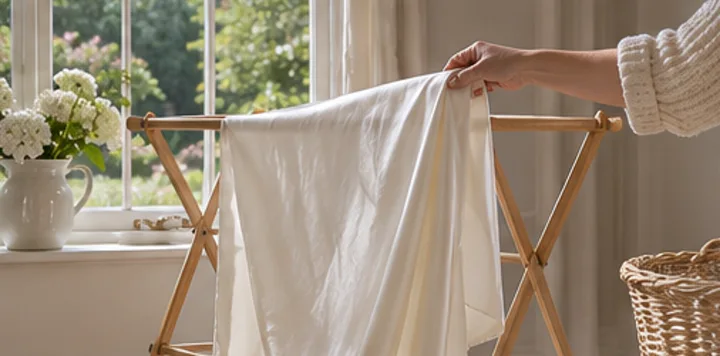
Quince directs buyers to line dry its case, while Blissy directs buyers to lay its case flat. Give both methods clean air circulation and follow the exact label. A flat surface is convenient if you want to avoid marks from rack bars. A spare case lets you remake the bed while the first one dries.
Considering professional cleaning
Some silk labels allow professional cleaning. Ask the cleaner to check the sewn-in label and point out any staining or trim that needs attention. Compare the per-visit cost with your own time and available drying space. For routine washing, most people will find an approved home method easier to schedule.
Who it suits
Good for
People choosing a wash routine for one or two silk cases or working out if their existing laundry setup has the needed gentle cycle and drying space.
Consider an alternative if
For a dry-clean-only label, use the recommended professional process. If the label is missing, contact the manufacturer before choosing a wash or treatment.
Frequently asked questions
Is delicate cycling permitted for every silk case?
No. Some permit gentle machine washing and others specify a different method. Check the tag on your particular item.
How should I dry a freshly washed case?
Follow the label's instructions for flat drying or line drying. Let the fabric dry fully before inserting the pillow.
Can I use my regular laundry detergent?
Check whether the maker approves it for silk. A detergent that works well for cotton can differ from what a silk care label recommends.
 Master Woven Silk