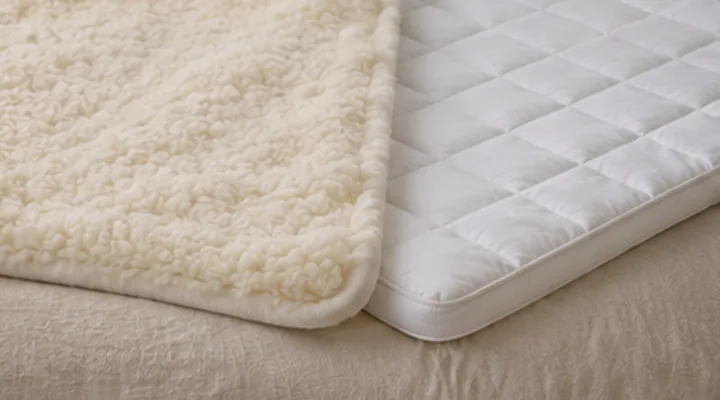
ComparisonLatex vs. Memory Foam vs. Fiber Mattress Toppers
Compare latex, memory foam, and quilted fiber mattress toppers by how they change the feel of a sound mattress.
By Khristmas Putman
The bottom line
Latex is the strongest starting point for a springier surface that recovers quickly when you roll over. Choose memory foam for a slower, closer contour. Choose quilted fiber for a soft, bedspread-like surface above a mattress you already like. Measure the bed first, then decide how much height and change in feel you can comfortably add.
What to look for
- Check the bare mattress for a dip or structural damage before buying a surface layer.
- Use thickness to judge how noticeable the change could be, alongside foam firmness or fiber construction.
- Measure the combined mattress and topper height before choosing a fitted sheet.
- Check which cover can be cleaned and whether corner straps or a protector will fit.
At a glance
Approximate U.S. price ranges vary by size, seller, and date.
| Option | Price range | Material | Size | Best use | Pros | Cons |
|---|
| Natural latex | Midrange to premium | Solid latex foam | Common bed sizes, 1 to 3 in. | Springy cushioning | Fast recovery | Can be heavy |
|---|
| Memory foam | Budget to premium | Viscoelastic polyurethane foam | Common bed sizes, thickness varies | Close contouring | Molds around body | Can feel enveloping |
|---|
| Quilted fiber | Budget to midrange | Fiber fill in stitched shell | Common bed sizes, loft varies | Soft surface layer | Quilted feel | Fill can compress |
|---|
What to know
Latex: a quicker recovery
Natural latex is sold in several firmnesses and thicknesses. A thinner, soft layer can mellow a firm surface without adding as much bed height. A thicker slab makes the material's springiness more noticeable. Expect to handle a fairly substantial piece when changing the bedding. Consider a cover you can maintain without lifting or washing the entire unit.
Memory foam: a closer contour
Memory foam's appeal is that its shape changes progressively around the sleeper. That gives some people the more settled feel they want from a firm mattress. The sensation can make it less appealing when you prefer to roll over quickly or dislike feeling enclosed. A deeper topper will also affect how much room the fitted sheet needs.
Fiber: comfort at the surface
A quilted fiber topper adds softness through batting or clustered fill in stitched compartments. This style suits a bed you already find supportive, especially when your goal is to soften the first contact with the sheet. Inspect the corner anchors and drying instructions. A bulky fiber layer needs more space in the laundry than its flat dimensions suggest.
Who it suits
Good for
Compare these three when you have a mattress that sits level and you can describe the feel you want to add. Choosing between springy, contoured, and quilted is more useful than treating all three as varying grades of the same cushion.
Consider an alternative if
Postpone a topper if the mattress has a visible body impression or if a bed frame feels loose. A new surface layer will follow the foundation underneath and might add expense without fixing the original problem.
Frequently asked questions
Is three inches necessarily better than one?
Three inches can make a larger change. Choose a thinner profile for smaller adjustments or to preserve the height of a low-profile bed.
Which tops are easiest to wash?
Compare the care instructions on the exact build. Some foam toppers have a removable cover, while a fiber design may have separate restrictions based on bulk.
Is a mattress pad the same as a fiber topper?
The labels can overlap. Compare fill depth, attachment, and fabric care with your goal, whether it is adding softness or protecting the mattress.
 Master Woven Silk