ComparisonSilk vs. Polyester Satin Pillowcases
Compare silk, polyester satin, and cotton percale by feel, price level, care, and everyday use.
By Khristmas Putman
The bottom line
Silk and polyester satin can both give a pillowcase a glossy, smooth face. Choose silk when you want the fiber itself and can accommodate the care label. Choose polyester satin when you want that surface at a lower price. If you prefer a crisp matte finish and want the pillowcase to match everyday cotton sheets, percale is a useful third option.
What to look for
- Separate fiber and weave when reading bedding labels.
- Compare swatches or single cases in the same light if sheen matters.
- Decide how much room you can leave in your laundry routine for air drying.
- Use care labels to narrow the choices before comparing color ranges.
At a glance
Approximate U.S. price ranges vary by size, seller, and date.
| Option | Price range | Material | Size | Best use | Pros | Cons |
|---|
| Mulberry silk | Midrange to premium | Silk | Standard to king | Silk fiber and sheen | Declared fiber and weight | Gentle care |
|---|
| Polyester satin | Entry | Polyester | Standard to king | Gloss at lower cost | Smooth woven face | Care varies by maker |
|---|
| Cotton percale | Entry to midrange | Cotton | Standard to king | Crisp, matte bed linen | Easy to match to sheets | Less sheen |
|---|
What to know
How the two glossy fabrics differ
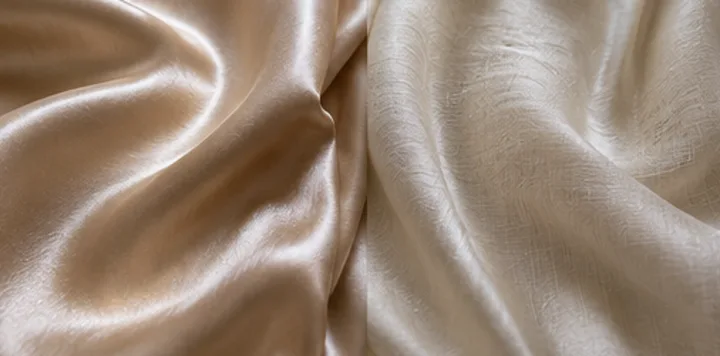
Silk is a fiber, while satin is a structure in which longer threads float across the surface to create a characteristic sheen. Satin can be woven from silk or polyester. Fabric weight and details such as seams contribute to the feel of the finished item, so two fabrics labeled satin need not look or feel identical.
How care changes the decision
Silk examples in this guide call for gentle washing and air drying. Some polyester satin makers also advise washing cool to preserve the finish. Read the exact instructions instead of moving a new case into the cycle you use for an old cotton pillowcase. Frequent care can make a spare case worth budgeting for.
Where percale fits
Percale offers a third choice for people who like the look of matte, plain-weave bedding. Look for an established cotton composition and check the wash label, since heat settings can vary. If your main goal is matching a cotton sheet set, an extra case in the same collection is the simplest styling choice.
Compare the surfaces at home
Place a clean sample near the headboard and look at it under your daytime and bedside lighting. Gloss tends to stand out more under a lamp at a shallow angle. Turn the fabric over, inspect the seams, and think about whether the sheen still appeals to you at the scale of a whole pillow.
Who it suits
Good for
Readers deciding between a glossy pillowcase and a crisp matte one, and shoppers trying to understand why similar-looking cases come with different price levels.
Consider an alternative if
Anyone replacing just one discontinued case in a set can start with the original case label and exact color name. A broad comparison gives less useful information when an exact match is the priority.
Frequently asked questions
How do I check whether a satin case contains silk?
Find the fiber-content line on the packaging or product listing. A shiny surface, a product name, or the word satin cannot settle the composition.
Does matte cotton require the same care as silk?
The label on each case determines the cycle and drying instructions. A plain cotton percale case often has a broader range of care settings than the reviewed silk examples.
Do I need both pillowcases to use the same fabric?
Only if you want a matching surface and color. Mixing fabrics is fine if each case fits its insert and you can handle the different wash routines.
 Master Woven Silk