ComparisonZippered vs. Envelope Pillowcases
Compare hidden-zipper, envelope, and open-end pillowcases for fit, care, and ease of dressing the bed.
By Khristmas Putman
The bottom line
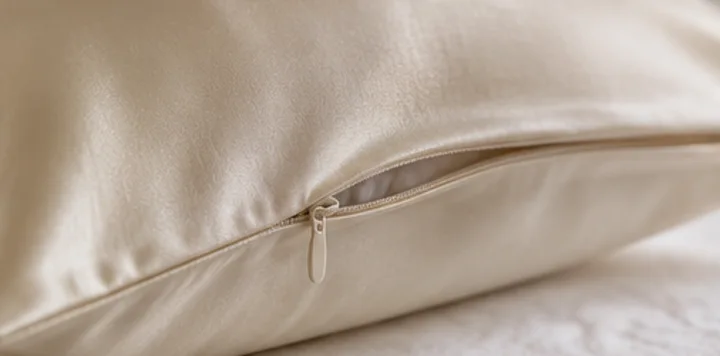
Choose a hidden zipper when you want the opening to stay shut as you turn a pillow. Choose an envelope flap for an enclosed edge made entirely of cloth. An open-end case is the quickest style to pull over an insert, and a useful pick if you regularly change cases on several deep pillows at once.
What to look for
- Match the pillow length and thickness before choosing a closure.
- Check where the zipper is placed and how far the opening extends.
- Inspect an envelope case's flap depth if your pillow is especially full.
- Look for a cuff or extra length if you prefer an open-end case.
At a glance
Approximate U.S. price ranges vary by size, seller, and date.
| Option | Price range | Material | Size | Best use | Pros | Cons |
|---|
| Hidden zipper | Entry to premium | Silk or polyester satin | Standard to king | Fully secured edge | Keeps case closed | Hardware; opening may be narrow |
|---|
| Envelope flap | Varies | Silk, satin, or cotton | Check exact length | Hardware-free pillow edge | Cloth covers insert | Shallow flap can shift |
|---|
| Open end | Entry to midrange | Often cotton | Check length and cuff | Fast bedding changes | Easy to dress | Insert can protrude |
|---|
What to know
Hidden zippers for a closed end
A full closure keeps the insert covered when the pillow gets turned. Look for a pull that sits close to the seam and a long enough opening to insert the pillow without pushing on the teeth. Fold a soft pillow slightly as you feed it in. For a solid foam insert, check the opening before choosing a narrow case.
Envelope flaps for a cloth edge
A deep overlapping flap can conceal the end of the pillow without hardware. Slip lists envelope and zippered versions in a pink queen case with the same nominal dimensions. That comparison lets you focus on how the edge behaves. An overfilled insert can pull the inner panel open if very little fabric overlaps.
Open-end cases for fast changes
A straight, open end makes a flexible option for replacing cases quickly on guest beds. Look for an example with enough length to hide the ticking on your pillow. Use the cuff to check which end faces out when you make the bed. A full pillow can protrude at an open edge if the case is a near-exact length.
Check the fitted case before committing
Dress the pillow and set it down the way you plan to use it, then turn it over and inspect the short seam. If the zipper strains, check dimensions again. For a flap, check whether the interior fabric still covers the pillow. Fit and fabric construction determine more than the closure name alone.
Who it suits
Good for
Anyone replacing pillowcases that creep off the insert, choosing between two listings with matching fabric specifications, or dressing beds with unusually thick pillows.
Consider an alternative if
If your current case already rotates and washes easily, a closure change may accomplish very little. Prioritize size and texture when they account for the discomfort you are trying to fix.
Frequently asked questions
Should I size up for a very lofty insert?
Check the width and length as well as usable opening room. An oversized case can bunch, so choose a size the maker recommends for the pillow dimensions.
Does a zipper mean I can wash it with denim?
Follow the fabric care label. A separate gentle load or a mesh bag may protect the case from rubbing against heavier garments and exposed hardware.
Are envelope and open-end cases the same?
An envelope case has an internal panel that folds over the insert. An open-end case leaves the pillow accessible without lifting a flap.
 Master Woven Silk