 Master Woven Silk
The bottom line
Measure the usable rug footprint before looking at colors. Pick the pile, backing, and pad your floor can accommodate, then choose a throw that fits the person who will actually use it and the wash routine you can sustain.
Choose an area rug and throw by working backward from your furniture, floor, and cleaning routine.
Measure the usable rug footprint before looking at colors. Pick the pile, backing, and pad your floor can accommodate, then choose a throw that fits the person who will actually use it and the wash routine you can sustain.
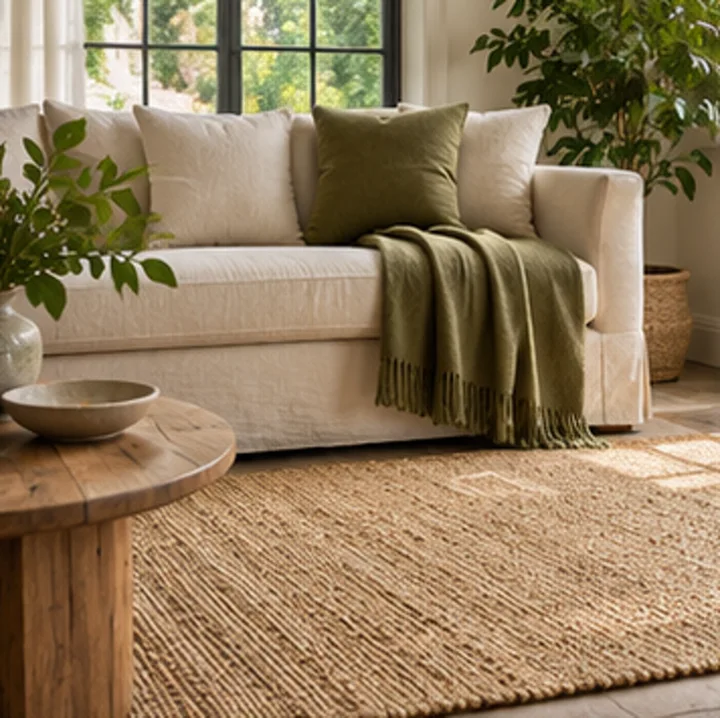
For a conversation area, a useful starting point is a rug that can catch the front legs of both the sofa and the chairs. Tape the edges and walk through the main path. In an open plan, stop short of an aisle rather than letting one corner become a trip point.
A removable washable cover matters only if it fits the machine you use. Jute can work in a dry, low-spill space; put it by the dining table only if occasional marks are acceptable. Read separate instructions for the rug and its pad, and let both surfaces dry before reassembly.
Measure from your shoulders to your feet when seated if you want full coverage. Cotton with a washable label is practical for frequent use. If you want a winter layer, compare wool weights and cleaning instructions. For a mostly decorative throw, check where the fringe will land when you drape it.
Readers furnishing a living room from scratch or moving existing furniture into a new room.
Start with a specialized underlay or clearance check if the room has a low fireplace door, a wheelchair route, or a finish requiring a specific pad.
Check the rug and flooring manufacturer first. A compatible pad can help thin rugs stay put and soften the surface.
Tape both footprints. Favor the larger size if it fits the traffic path and gets furniture legs off an exposed edge.
Around 50 by 60 inches can work for one seated person. Measure your sitting length for shoulder-to-foot coverage.